WWJD
This reflection originally appeared in the February edition of The UN & You, my monthly newsletter for the Sisters of Charity Federation. I hope this presents a realistic view of the role Civil Society and the Religious at the UN play at the United Nations, hopefully being faithful to the life and message of Jesus.
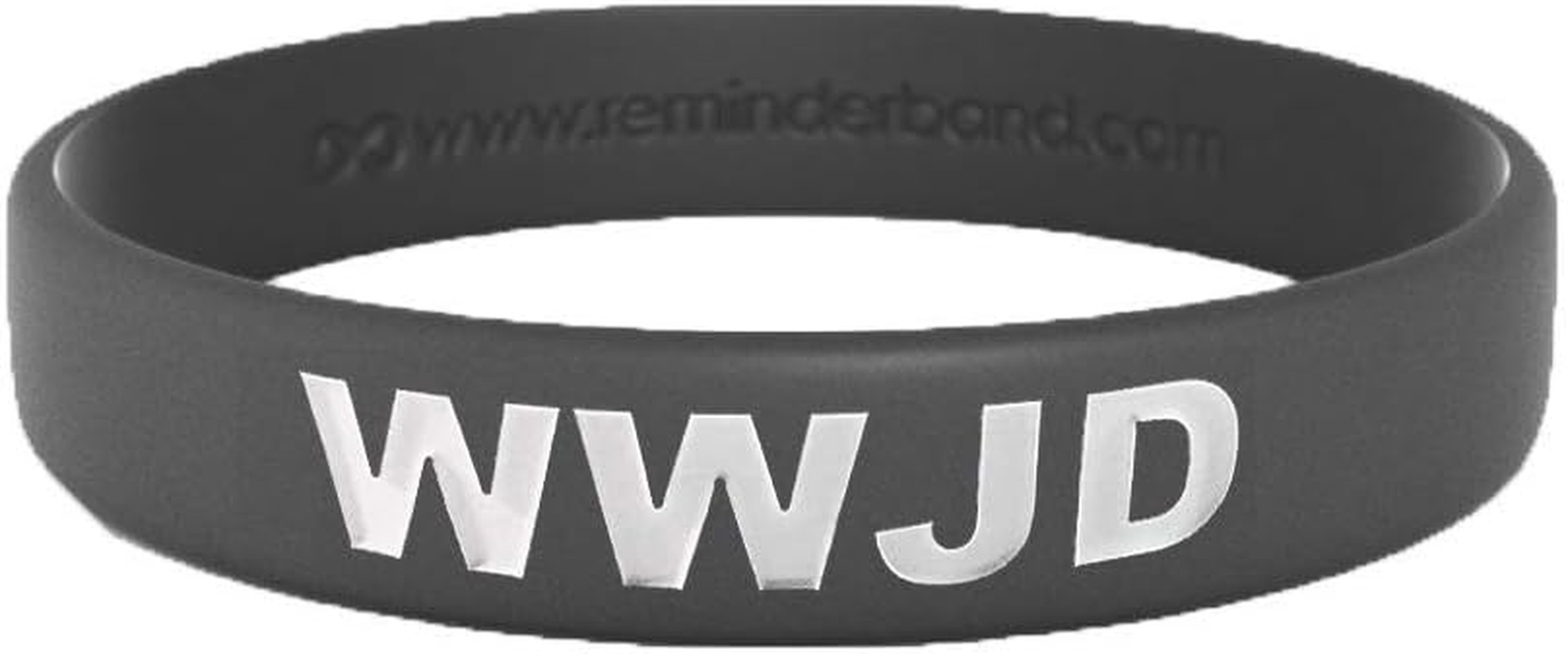
Around 25 years ago, I used to wear a silicone wristband on my right wrist with the acronym, “WWJD.”
It was popular at the time, reminding those who wore it to reflect on “What Would Jesus Do” before making a decision or taking an action.
I thought of this recently, and started to wonder, “What would Jesus do, today?” More specifically, where would He be? Would He be at the United Nations?
I am not a biblical scholar, but I feel comfortable in guessing where Jesus would be based on how He spent his ministry over 2,000 years ago. I am quite certain He would be on the margins, in relationship with those who are lacking the human rights and dignity that they deserve. Jesus walked and ate with sinners and tax collectors, while healing, teaching, and modeling how to love. We would expect Him to do the same, now.
There is no doubt that Jesus would also be with the religious leaders, pointing out their responsibility to the most vulnerable, while urging them to find the divine in their midst. It is encouraging to see in the United States the Catholic Bishops speaking up for immigrants, for LCWR and religious communities advocating for the most vulnerable, and for the strong messages from Pope Leo. This is exactly what Jesus would do.
Now, would Jesus be at the UN? It is hard to tell as the UN clearly didn’t exist in His time, and advances in technology and travel allow for governments to engage with one another in a way that was once impossible.
We can look to the work of the Holy Spirit; however, especially in our own Vincentian charism, for further clarity. St. Vincent spoke often before the Royal Court, advocating for women and children, acknowledging that charity can only go so far.
We can also look at the Papacy, with Popes Paul VI, John Paul II, Benedict XVI, and Francis addressing the United Nations during their tenures.
Pope Paul VI in 1965 famously declared, “Never again war!” Pope John Paul II, addressed the Assembly twice, emphasizing religious freedom, human rights, and the spiritual dimensions of international politics. Pope Benedict focused on human rights and the “moral law written into human nature.” Pope Francis focused on the environment, poverty, and “responsible management” of the global economy. Perhaps, in the near future, Pope Leo will have his opportunity to address the global community at the UN Headquarters, too.
Maybe the best clue to the question “Would Jesus be at the UN” is found in Civil Society who are present at the UN every day. I continue to be impressed and inspired by my colleagues who represent the moral voice and those with lived-experience. Almost all religions and spiritualities are represented, expressing a deep concern for care for creation and human rights and dignity.
Like Jesus when He lived, Civil Society has almost no power. What we bring is credibility, authenticity, and a moral compass. We provide information from the ground that Member States often lack. We provide solutions that work on smaller scales, with potential for large scale replication. We model the importance of relationships, building trust and reminding all why we are at the UN in the first place. We bring hope for the world.
I would like to believe that Jesus would walk through the halls of the UN Headquarters with little fanfare. While we might desire for Jesus to flip the tables inside those respected conference rooms, it is far more likely He would walk with, listen, and then share the truth. If he was given the floor to offer an intervention, maybe He would even recite the Beatitudes as a road map to bringing the Kingdom to not only the UN, but to the larger world.
The Catholic Religious at the UN often say, “it is good for us to be here.” I believe this remains true as we seek to transform systems that must lift up and provide human rights and human dignity. As the UN continues to evolve, we have an opportunity to reshape it in an effort to unite, heal, and protect all who call this world home- just as Jesus would do.