The Stable: An Advent Reflection
Following my most recent post, a friend wrote in the comment section, “look to the Nativity.” This has inspired my writing plans for the next few weeks as we journey through the Advent season.
For the first time, I will explore the “characters” of the Nativity scene through the eyes of illness. These historical figures will provide important lessons for us all.
Let us begin with the person who opened his stable to a very pregnant Mary and a desperate Joseph.
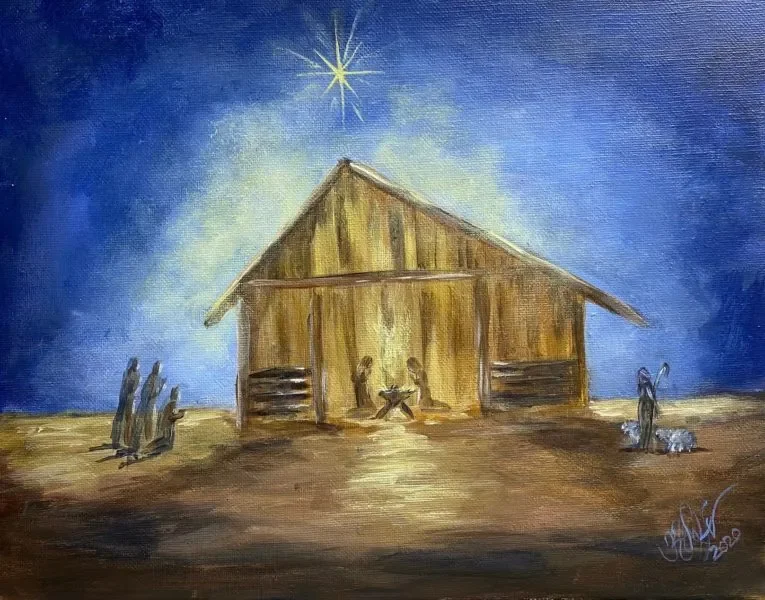
In Luke’s Gospel (2:1-20), we learn of Jesus’ birth.
Scripture tells us, “And she gave birth to her firstborn son and wrapped him in swaddling cloths and laid him in a manger, because there was no place for them in the inn (Luke 2:7).”
Words of caution
We are familiar with that last phrase, “there was no place for them in the inn,” reminding us to not make the same mistake. How often do we close our doors to God? So often we are distracted by the tasks of the day, our wounds and our pride, that we do not see God in our midst.
Those of us who are the religious type must also proceed with caution. Consider how the religious of Jesus’ time couldn’t recognize who he was in his three years of ministry because they were so concerned with the law and rules. Two-thousand years later, and we continue to exclude the vulnerable and those who are different, all in the name of God.
Maternal Mortality
Let us return to the birth of Jesus and the stable that served as the Holy Family’s first home. I can easily recall the fear and urgency that I felt as I drove my very pregnant wife to the hospital. I couldn’t imagine what Mary and Jesus felt as they searched for a safe place to land.
Where they ended up was not ideal. As livestock looked on, Jesus was born in a manger. There were no medical personnel and it was certainly not a sterile environment- it was just a mother, father, and their newborn in a barn.
We should be reminded that on average, 712 mothers die each day from preventable causes of death during childbirth, with most of these deaths occurring in Sub-Saharan Africa and Southern Asia. Recent cuts to humanitarian aid, especially by the United States, is having a grave impact on vulnerable mothers. You can read more here. The realities that the Holy Family faced so long ago remains for so many of our brothers and sisters.
Why Not Inside?
Let us again return to Bethlehem over 2,000 years ago, and in the darkness of night, imagine Joseph knocking on the door of the home of the family that owned this manger. They could have closed the door, but instead, they provided shelter.
We can wonder; however, why they didn’t let them into their home?
Was it overcrowded, too small for a baby’s birth? Was the home not tidy enough for company? Were the new guests an inconvenience?
The stable serves as a humble beginning for Jesus, and it was better than the alternative. Yet, we must ask ourselves, how do we make room for God in our lives?
The stable, in all its messiness and simplicity, reminds us that we do not have to have it all together to let God in. In fact, it is in the disorder where we often can finally see and feel the divine love that is always knocking on the doors of our heart.
For the past five months, as I learned of my cancer diagnosis, and received chemotherapy, life has been messy. In not feeling well, new limitations present a new, unwelcomed reality. I am already tired of being tired.
I am reminded to not put Jesus in the stable of my life, out in the distance. While it is better than a closed door like that of the previous inn keepers, the invitation is so much more than we often allow.
In the limitations of health, we are forced to slow down. The messiness of life becomes a bit more acceptable, and the need for God grows even more. Let us learn from the family who opened the gates of their stable, but not the doors of their home. If they only knew they were chosen as the birthplace for the Christ, they would have opened their arms and home, securing the safety and comfort of the Holy Family.
May we let God fully into our lives this Advent season by way of contemplation and action.
One final thought
The Christmas story is historical as it symbolic. We are presented with an invitation that is both spiritual and practical. This reflection focuses on the spiritual, allowing God into our hearts and lives- because of the messiness, disorder, and limitations. But we are also called to open our hearts and lives to the vulnerable of our time.
How are we easing the discomfort of those laboring, those in need?
Are we the inn keepers saying there is no room or time?
Are we the owner of the stable, giving what is only convenient and not an imposition?
May we learn together to fully open our hearts and doors to the God that is present, not only in our prayer and in our hearts, but also in the strangers seeking our charity, advocacy, and inclusion.